

When moving into a new rented apartment or leasing commercial office space in bustling Indian tech hubs like Bangalore, Pune, Hyderabad, Gurgaon, or Mumbai, one of the most pivotal clauses in the contract is the Lock-in Period. Typically ranging from 3 to 6 months in residential leases—and 1 to 3 years in commercial contracts—the lock-in clause guarantees stability: the landlord is assured of uninterrupted rental yield, and the tenant is assured of continuous tenure without threat of arbitrary eviction.
However, real life is unpredictable. Corporate layoffs, sudden job relocations to another city or country, sudden medical emergencies, uncooperative landlords failing to fix severe water seepages, or property sales frequently compel one party to terminate the tenancy long before the lock-in tenure expires.
When this happens, intense legal conflict erupts: Can a landlord legally confiscate the tenant's entire security deposit? Can a landlord compel the tenant to pay rent for the remaining unexpired months? And what happens if the landlord breaks the lock-in period early?
In Indian jurisprudence, the enforceability of lock-in periods is governed by the Indian Contract Act, 1872 (specifically Sections 73 and 74), along with landmark Supreme Court rulings on liquidated damages. In this definitive 2026 legal guide, we break down how lock-in clauses operate under Indian law, court rulings on early termination penalties, the landlord's legal duty to mitigate losses, valid statutory exceptions, and how drafting a balanced agreement on LetOutAgree prevents bitter lock-in disputes.
Draft a Balanced, Legally Airtight Rental Agreement
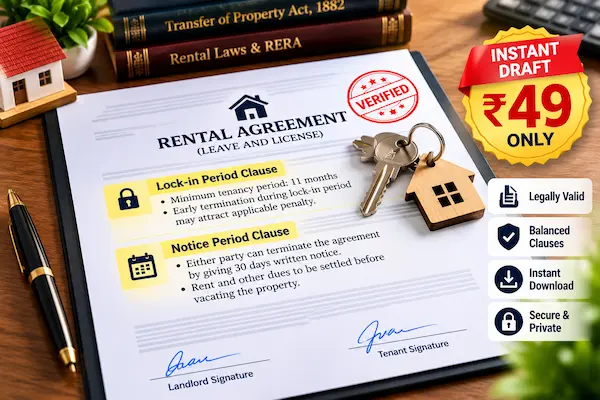
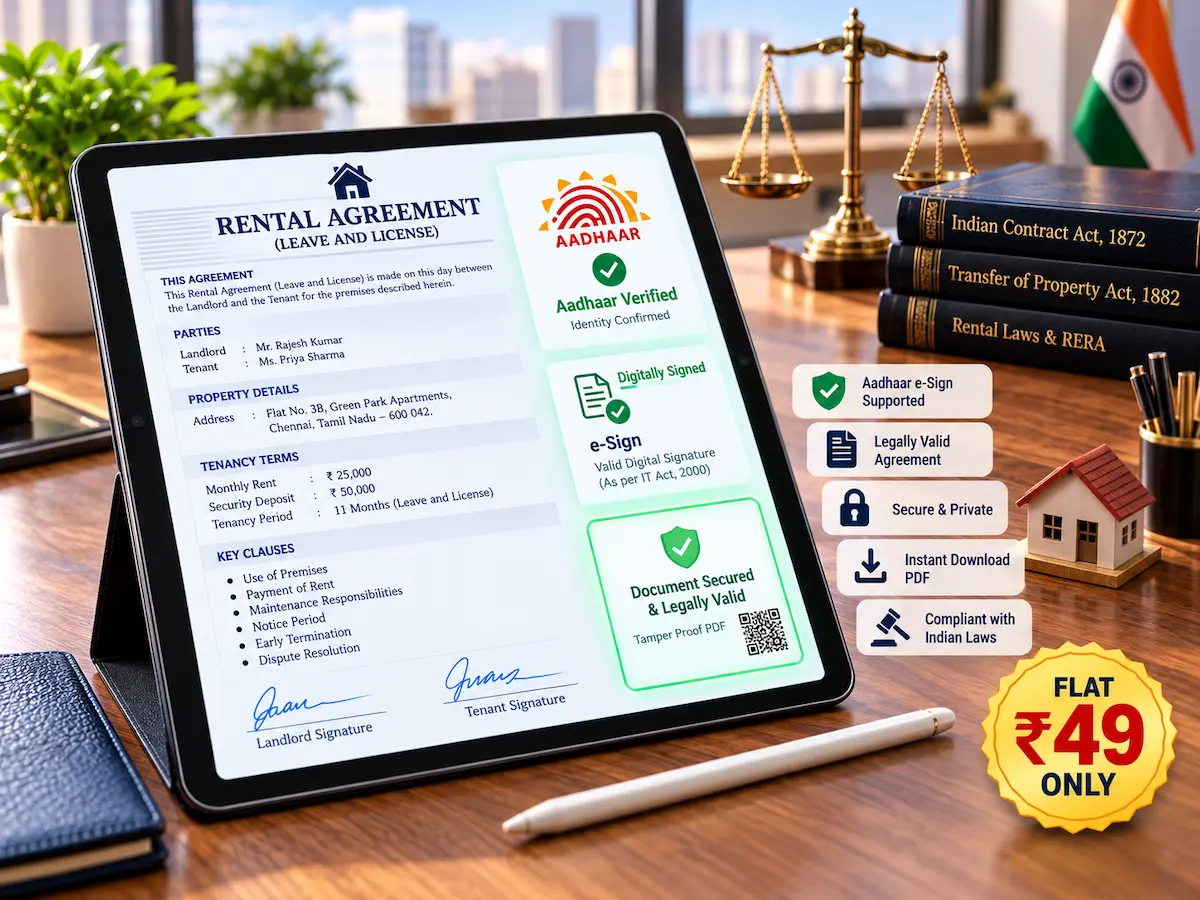
Avoid lock-in disputes and deposit forfeiture battles. Generate an attorney-vetted agreement with balanced early exit clauses, explicit notice terms, and job transfer exemptions for flat ₹49.
What Is a Lock-in Period in Indian Rental Law?
A Lock-in Period is a legally binding contractual covenant under which both parties agree that neither the landlord nor the tenant can terminate the tenancy or leave and license agreement during a specified initial period (e.g., the first 3, 6, or 11 months of an 11-month contract).
Under Indian property law:
- The Tenant's Commitment: The tenant agrees that they will not vacate the premises, surrender the keys, or stop paying monthly rent before the lock-in period concludes.
- The Landlord's Commitment: The landlord covenants that they will not ask the tenant to vacate, issue a termination notice, or demand possession during this window (except in instances of gross material breach or rent default).
Is a Lock-in Period Legally Enforceable in India?
Yes, lock-in clauses are legally valid and enforceable under Section 10 of the Indian Contract Act, 1872, provided they are entered into by mutual free consent of competent parties for a lawful object. However, there is a massive legal distinction between enforcing the clause and demanding unearned windfall penalties.
The Statutory Test: Section 73 vs Section 74 of the Contract Act
When a tenant breaks a lock-in period prematurely, Indian courts evaluate landlord claims under two core statutory provisions:
| Statutory Provision | Legal Principle | Court Application in Rental Disputes |
|---|---|---|
| Section 73 (Unliquidated Damages) | Compensation for actual loss or damage naturally arising in the usual course of things from the breach. | The landlord must prove actual financial injury (e.g., the property remained vacant for 1.5 months despite advertising efforts, or new broker fees incurred). |
| Section 74 (Liquidated Damages vs Penalty) | Reasonable compensation for breach where the contract pre-stipulates an amount or penalty. | The court will award only reasonable compensation, not exceeding the amount named. The court will strike down any punitive or unconscionable penalty. |
The Landmark Precedent: Kailash Nath Associates vs DDA (2015)
In the landmark judgment Kailash Nath Associates vs. Delhi Development Authority (2015), the Supreme Court of India reaffirmed the bedrock rule laid down in Fateh Chand vs. Balkishan Das:
"Where a party suffers no loss whatsoever by reason of breach of contract, no damages can be awarded. Section 74 does not confer a right to recover damages unless the claimant has actually suffered loss or damage."
What this means for landlords and tenants: If a tenant vacates in Month 3 of a 6-month lock-in, and the landlord immediately leases the flat to a new tenant from Month 4 without losing a single day of rent, the landlord CANNOT legally pocket rent for Months 4, 5, and 6 from the previous tenant! Doing so amounts to unjust enrichment, which Indian civil courts will not enforce.
The Landlord's Statutory Duty to Mitigate Losses
Under the Indian Law of Torts and Contract Act principles, an aggrieved party is under an affirmative legal obligation to mitigate their financial losses. A landlord cannot deliberately keep the property vacant for the remainder of the lock-in period and then file a suit demanding rent arrears from the departed tenant.
To lawfully claim damages for premature exit during a lock-in period, the landlord must produce evidence demonstrating:
- They promptly advertised the vacancy on property portals (99acres, Magicbricks, NoBroker) or engaged local real estate brokers.
- Despite bona fide efforts, the premises remained vacant for a specific timeframe (e.g., 45 days).
- The tenant is only liable to pay compensation for the actual period of vacancy plus any new brokerage fees incurred to find the replacement tenant.
Can a Tenant Break the Lock-in Period Without Penalty? (4 Valid Exceptions)
Tenants are not entirely helpless if they must vacate early. Indian courts recognize four primary legal defenses where a tenant can terminate a rental agreement during the lock-in period without incurring financial penalties:
1. The Job Relocation / Transfer Clause (Force Majeure)
In IT and corporate employment hubs, standard employment contracts mandate inter-city or overseas relocations on short notice. If your Rental Agreement incorporates an explicit "Job Transfer / Relocation Clause", the tenant is legally exempt from lock-in penalties upon producing an official employer transfer letter and serving the standard 30-day notice.
2. Landlord's Material Breach & Habitability Issues
A tenant enters a contract on the condition that the premises are structurally sound, habitable, and safe. If the landlord fails to repair critical defects—such as severe sewage backflow, persistent roof leakages during monsoons, non-potable contaminated water, structural wall cracks, or non-functioning elevators—the tenant has the legal right to terminate the contract immediately under Section 39 of the Contract Act due to landlord breach, demanding a 100% refund of their security deposit.
3. Illegal Demands or Breach of Tenant Privacy
Under Indian tenancy law, the tenant enjoys the right to peaceful, quiet enjoyment of the premises. If the landlord frequently trespasses without prior 24-hour notice, harasses guests, or arbitrarily changes lock codes, the landlord is in fundamental breach of contract, allowing the tenant to walk away without penalty.
4. Mutual Written Termination
Both parties can mutually agree in writing (via email, WhatsApp, or formal deed of cancellation) to waive the remaining lock-in period and settle the security deposit amicably.
Can a Landlord Break the Lock-in Period Early?
Lock-in periods are bilateral covenants. If a landlord attempts to terminate the agreement and evict a tenant during the lock-in period—for instance, because they found a buyer or want to hike rent—the tenant is entitled to substantial legal protections:
- Right to Injunction: The tenant can approach the Civil Court or Rent Authority to seek a temporary injunction restraining the landlord from disturbing their peaceful possession until the lock-in period expires.
- Claiming Relocation Damages: Under Section 73, if the tenant is forced to vacate prematurely by the landlord, the tenant can sue the landlord to recover: (a) brokerage fees paid for the new apartment, (b) packing and moving charges, and (c) any higher rent difference incurred for comparable alternative accommodation during the remaining lock-in tenure.
How Notice Period Interacts with the Lock-in Period
A frequent source of bitter misunderstanding is how the Lock-in Period interacts with the Notice Period. Consider an agreement that specifies a "6-Month Lock-in Period and a 1-Month Notice Period":
| Interpretation | How It Works in Practice | Legal Assessment |
|---|---|---|
| Concurrent Notice (Standard) | Tenant serves notice at the end of Month 5, vacating on the last day of Month 6. | Fully Valid & Compliant. Full 6 months of rent paid, lock-in honored. |
| Consecutive Notice (Harsh) | Landlord claims notice can ONLY be served after Month 6 concludes, forcing tenant to stay until Month 7. | Often disputed in court as oppressive unless the contract explicitly uses the words "Notice shall only be served after completion of the lock-in period". |
Draft a Balanced, Dispute-Proof Agreement on LetOutAgree
Amateur agreements downloaded from generic internet blogs often contain vague, one-sided lock-in clauses that result in police calls and prolonged court battles. LetOutAgree protects both landlords and tenants with attorney-vetted drafting precision:
- Choose Your Terms: Select from flexible lock-in durations (Nil, 1 Month, 3 Months, or 6 Months) tailored to your comfort level.
- Balanced Notice Mechanics: Clearly integrates harmonious notice period timelines, eliminating ambiguity between Month 5 vs Month 6 exits.
- Pre-Structured Job Relocation & Force Majeure Clauses: Automatically inserts reasonable exemptions protecting working professionals against unjust penalties.
- Instant Free Live Screen Preview: Read every single word of the draft before making any payment.
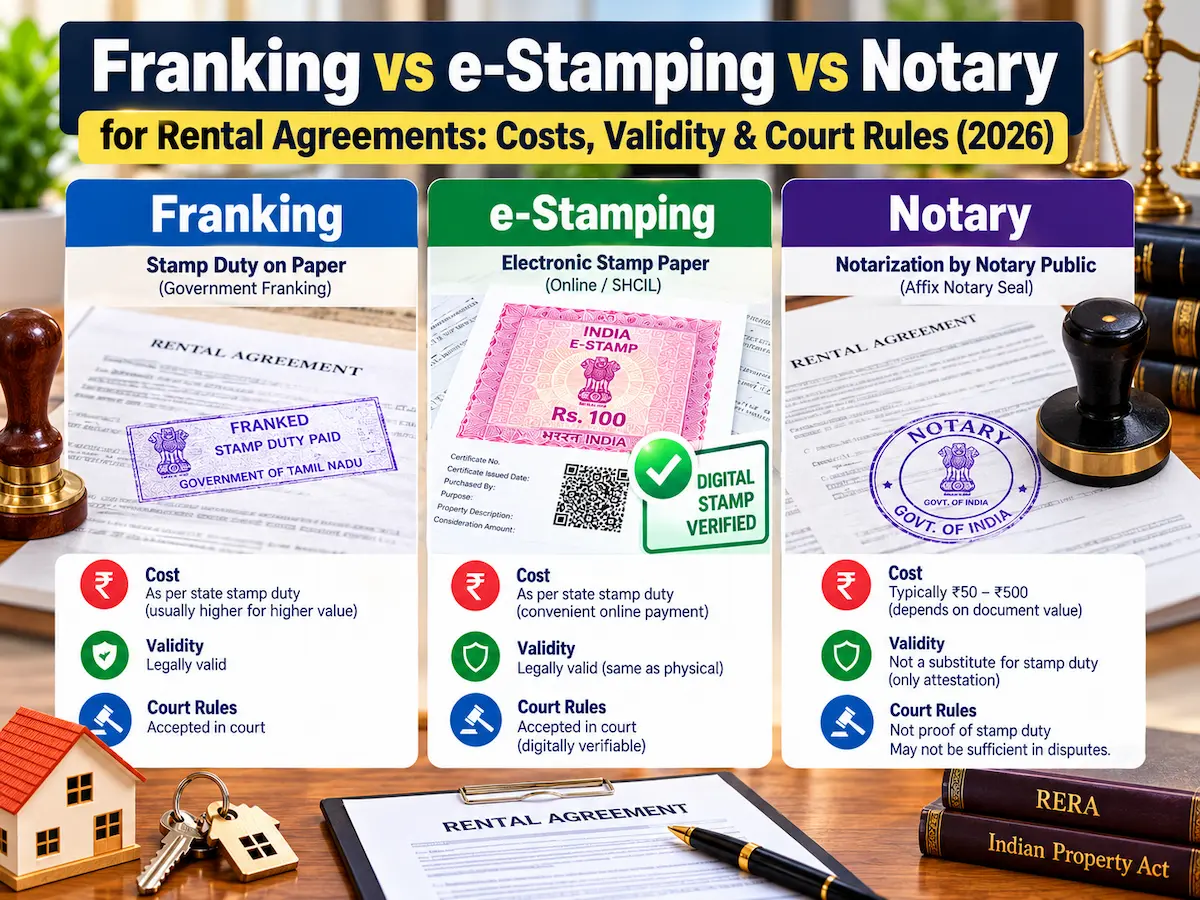
- Flat ₹49 Instant PDF Download: Download your high-resolution A4 PDF ready for attachment to state e-Stamp paper in under 3 minutes.
This article is for informational purposes only and does not constitute legal advice. Please consult a qualified legal professional for advice specific to your situation.
Comments (0)
Login to leave a comment.