
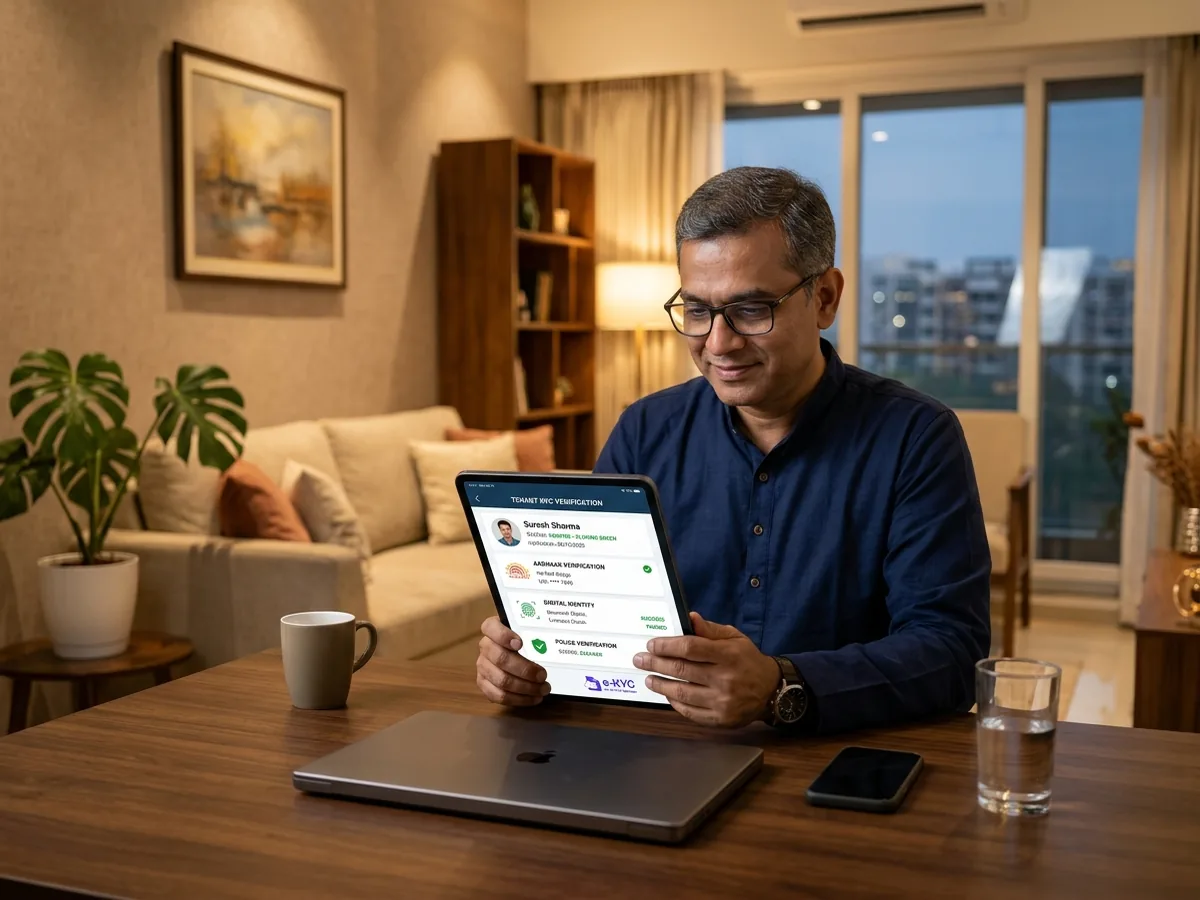
For Indian property owners, renting out an apartment, villa, or independent floor represents one of the most reliable avenues for monthly rental income and long-term capital wealth. However, the financial success of your rental property hinges entirely on a single critical factor: the quality and integrity of the tenant you place inside your premises.
Every seasoned landlord knows the catastrophic consequences of renting to an unvetted occupant: chronic rent payment delays, bounced cheques, unauthorized commercial subletting, loud nuisance complaints from housing society Resident Welfare Associations (RWAs), severe structural damage, or in the worst-case scenario, an obstinate tenant who refuses to vacate when the agreement expires, forcing you into years of expensive civil court eviction proceedings under the Transfer of Property Act, 1882.
While many property owners rely on verbal assurances or casual broker introductions, professional property management in 2026 demands a structured, legally compliant Tenant Background Verification Checklist. Comprehensive screening allows you to verify identity, confirm genuine financial solvency, evaluate past tenancy behavior, and comply with mandatory statutory police verification rules.
In this definitive 2026 guide, we break down the 7 essential checks every Indian landlord must conduct before handing over house keys, highlight critical tenant red flags, explain data privacy compliance under the Digital Personal Data Protection Act, 2023 (DPDP Act), and demonstrate how executing an attorney-grade agreement on LetOutAgree legally locks in your property protection for just ₹49.
Lock In Your Tenant Screening with an Airtight Agreement
Screening is only half the battle. Protect your property with an attorney-grade 11-month Leave & License agreement featuring strict KYC annexures, explicit permitted occupant schedules, and automatic default remedies for flat ₹49.
The 7-Step Tenant Background Verification Checklist for Indian Landlords
Conducting due diligence does not mean invading a tenant's personal life; rather, it establishes a transparent, mutual standard of financial reliability, identity authenticity, and legal accountability. Follow these seven systematic steps:
1. Identity & Government KYC Verification (Aadhaar, PAN & Passport)
Forged identity documents and altered photocopies are unfortunately common in metro rental markets. Never accept an unverified black-and-white photocopy without validating its authenticity:
- Masked e-Aadhaar Verification: Request the tenant to share a digitally signed Masked e-Aadhaar (which hides the first 8 digits for privacy) downloaded from the official UIDAI portal or via DigiLocker. You can instantly verify the QR code on the Aadhaar card using the official mAadhaar app on your smartphone to ensure the name, photograph, and date of birth match UIDAI records.
- PAN Card Cross-Verification: Cross-check the tenant's Permanent Account Number (PAN) directly on the Income Tax Department's official e-filing portal using the free "Verify Your PAN" utility. This confirms whether the PAN is active and matches the individual's full name.
- Passport / Voter ID / Driving License: For foreign nationals or Non-Resident Indians (NRIs) renting in India, obtaining an original passport copy and valid Indian visa (along with statutory Form C reporting to the Foreigners Regional Registration Office - FRRO) is mandatory by law.
2. Employment & Income Stability Checks (Salary Slips, Form 16 & Corporate Email)
Rent default is the number one cause of landlord-tenant disputes in India. Ensuring your prospective tenant possesses steady, verifiable employment is paramount:
- The 3x Monthly Rent-to-Income Rule: As a standard underwriting benchmark, a tenant's verifiable net take-home monthly salary should be at least 2.5 to 3 times the monthly rent. For example, if your flat rents for ₹30,000 per month, the tenant (or combined co-earning tenants) should ideally demonstrate a monthly take-home income of at least ₹75,000 to ₹90,000.
- Recent Salary Slips (Last 3 Months): Review original digital salary slips detailing employer name, employee code, PF deduction, and income tax TDS deductions.
- Form 16 or Income Tax Returns (ITR): For salaried employees, Form 16 Part B confirms consistent annual earnings. For self-employed entrepreneurs or freelance consultants, request the last 2 years' ITR-V acknowledgement alongside GST registration certificates.
- Official Corporate Email Ping: Avoid relying solely on Gmail or Yahoo addresses. Send a brief email to the tenant's official corporate email address (e.g.,
name@tcs.comorname@infosys.com) requesting an acknowledgement from their work inbox, confirming active employment status.
3. Financial Health & Creditworthiness (CIBIL Score & Bank Statements)
While credit scores have long been standard for home loans and credit cards, progressive Indian landlords now routinely request a CIBIL / Experian Credit Score Report:
- CIBIL Score Benchmark: A credit score above 750 demonstrates a disciplined financial track record, showing that the individual pays loans, EMIs, and utility debts punctually. A score below 650—or a history of recent loan write-offs or defaults—warrants elevated caution or a higher security deposit.
- Bank Account Statement (Last 3 to 6 Months): Ask the tenant to provide their primary salary bank statement. Examine it to confirm that monthly salary deposits match their salary slips, and check for recurring unpaid cheque return penalties or severe overdraft balances.
4. Previous Landlord Reference Check (The Most Crucial Step)
A tenant might look flawless on paper but have a history of playing blaring music at 3 AM, abusing building fixtures, or picking violent fights with neighbors. A quick 5-minute phone call to their immediate previous house owner provides invaluable qualitative insight.
Ask the previous owner these five objective questions:
- Did the tenant pay their rent on or before the due date every single month?
- Did they maintain the apartment premises cleanly, or was there substantial wear and tear upon move-out?
- Were there any complaints lodged by apartment neighbors or the Resident Welfare Association (RWA)?
- Did they honor the agreed lock-in period and provide proper written notice before vacating?
- Would you genuinely rent to this individual or family again?
Anti-Fraud Tip: Beware of fake references where the tenant provides a friend's or colleague's phone number posing as their past landlord. Verify the previous owner's identity by requesting to see the previous rental agreement or utility bill from that former address.
5. Social, Lifestyle & Society RWA Compatibility
In high-density apartment complexes and gated communities across cities like Bangalore, Mumbai, Pune, Chennai, and Delhi-NCR, housing societies enforce strict by-laws regarding community living:
- By-Law Compliance: Clarify society regulations upfront regarding pet ownership, dedicated parking slot usage, visitor entry timings, and elevator usage for shifting goods.
- Exact Occupancy Roster: Clearly establish who will physically reside in the flat. If a bachelor leases a 3BHK flat, explicitly document the names and IDs of all co-residents in the agreement annexure to prevent unauthorized rotation of unknown roommates or turning the property into an unlicensed Paying Guest (PG) hostel or Airbnb.
6. Mandatory Police Verification (Statutory Legal Requirement)
Tenant police verification is not merely an optional best practice; it is a mandatory statutory compliance under executive magistrate orders issued under Section 188 of the Indian Penal Code (IPC) and Section 223 of the Bharatiya Nyaya Sanhita, 2023 (BNS).
Failing to submit tenant police verification can lead to criminal prosecution, fines, and severe legal liability for the property owner if an unverified tenant engages in criminal, anti-social, or fraudulent activities on your premises. Fortunately, police departments across major states have fully transitioned to rapid online citizen portals:
- Delhi: Delhi Police Tenant Verification Citizen Portal & Tatpar App
- Uttar Pradesh: UPCOP Mobile App & UP Police Citizen Portal
- Karnataka: Karnataka State Police (KSP) Citizen Services Portal
- Maharashtra: Mumbai Police Citizen Portal & Maharashtra Police Tenant Information Portal
- Tamil Nadu: TN Police Citizen Portal & Kavalan App
For a detailed walkthrough of state-by-state online portals and step-by-step submission instructions, read our comprehensive guide on Tenant Police Verification: Step-by-Step Online Process, State Rules & Landlord Legal Penalties.
7. Permanent Address & Emergency Reachability Verification
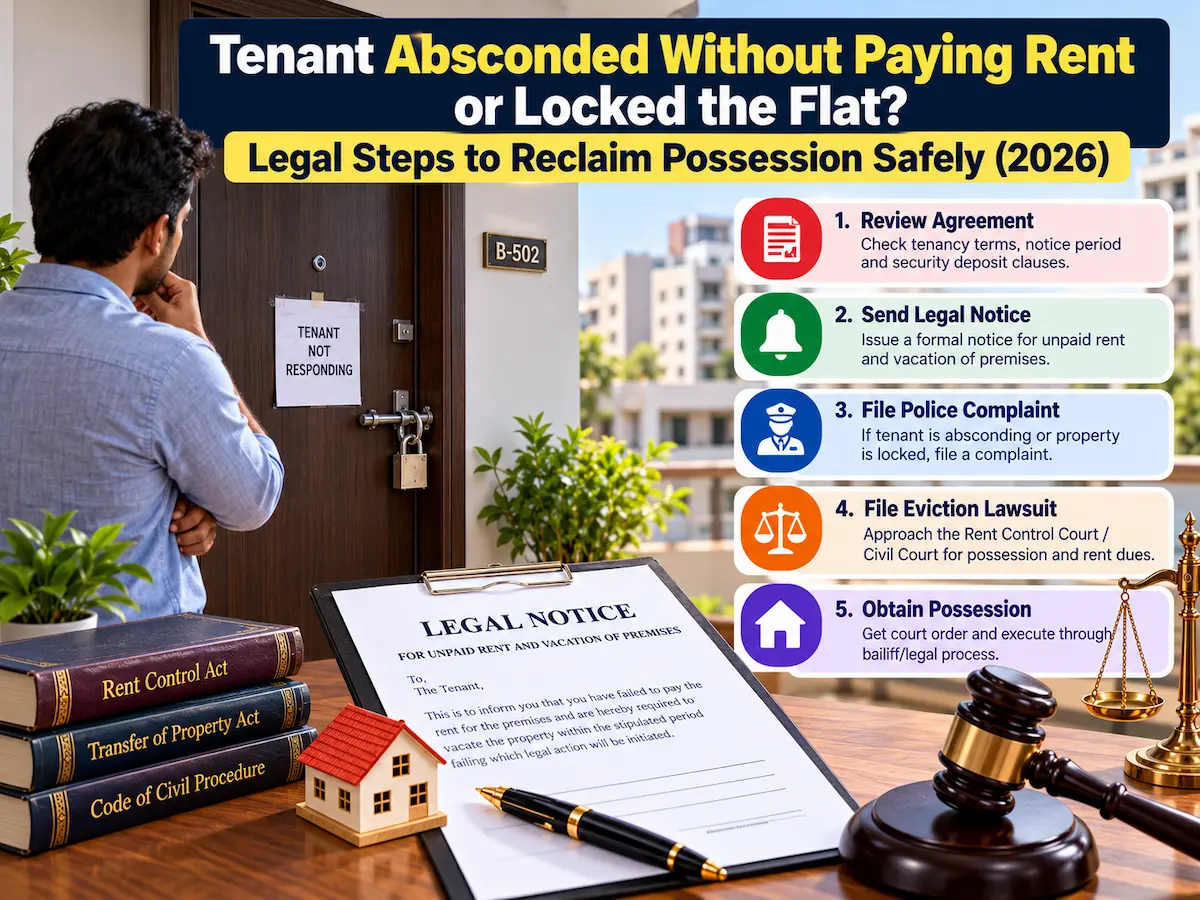
If a tenant suddenly abandons the property, defaults on multiple months of rent, or encounters a severe medical emergency, landlords must possess verifiable permanent roots to establish contact:
- Permanent Native Place Proof: Collect documentation showing their permanent home address (parents' electricity bill, ancestral property registry, or domicile certificate).
- Two Emergency Family Contacts: Record the contact numbers, relationships, and residential addresses of at least two immediate family members (parents, spouse, or siblings), ensuring you have dependable recourse in emergency situations.
Comprehensive Tenant Verification Matrix: At a Glance
Keep this quick reference guide handy whenever screening prospective applicants for your property:
Top 6 Red Flags Every Indian House Owner Must Heed
During prospective tenant negotiations, watch out for these recurring behavioral warning signs:
- Insistence on Paying Rent Strictly in Cash: If a prospective tenant offers to pay above-market rent or entire months in untraceable cash while refusing bank transfers (UPI/NEFT/RTGS), be immediately on guard. This frequently points to undisclosed income sources, tax evasion, or illicit commercial operations.
- Extreme Rush to Move In Within 24 Hours: Tenants who show desperation to occupy the property overnight without signing a written agreement or submitting KYC documents are often fleeing eviction, landlord disputes, or police inquiries elsewhere.
- Refusal to Sign an 11-Month Leave & License Agreement: Avoid occupants who push for informal oral leases or resist signing a documented, stamp-duty-paid contract. As covered in our guide on Why 11-Month Rental Agreements Are Legally Vital, an unwritten tenancy leaves you unprotected in court.
- Inconsistent or Unverifiable Employer Credentials: A tenant who cannot furnish an official corporate email, provides blurry business cards with mobile numbers only, or claims to work for an unregistered entity without GST/MCA records should be rigorously investigated.
- Unwillingness to Undergo Police Verification: Any tenant who resists police verification or asks you to "skip it to save hassle" is a massive legal liability. If that tenant commits a crime, you face criminal proceedings under Section 188 IPC / Section 223 BNS.
- Unrealistic Negotiation of Security Deposit: A tenant who haggles aggressively to reduce the security deposit down to a negligible fraction often indicates pre-existing cash flow distress, making future default highly likely. Read our guide on Security Deposit Limits & Inspection Checklists.
Data Privacy Compliance: Complying with the DPDP Act, 2023
While tenant screening is crucial, property owners must collect and handle personal data responsibly under India's Digital Personal Data Protection Act, 2023 (DPDP Act):
- Explicit Tenant Consent: Always inform the applicant upfront in writing or via digital form that their documents (Aadhaar, PAN, salary slips) are being collected strictly for tenancy KYC and police verification.
- Masked Aadhaar Best Practice: Never collect or store unmasked Aadhaar numbers if avoidable. Under UIDAI regulations, obtaining a masked e-Aadhaar where the first 8 digits are redacted is legally sufficient for residential leasing.
- Secure Storage & Confidentiality: Store tenant KYC documents securely. Never forward tenant salary slips or ID proofs to third-party marketing companies, brokers, or social media groups.
Transforming Tenant Verification into Court-Ready Legal Protection with LetOutAgree
Even the most thorough background check is meaningless if your rental agreement is weak, ambiguous, or downloaded from a generic internet blog. A standard verbal understanding or flimsy template will not protect you if an occupant stops paying rent or breaches society rules.
LetOutAgree empowers Indian landlords to convert verified tenant background details into an airtight, legally enforceable contract in less than 3 minutes:
- Select Your Agreement Category: Choose Residential Agreement or Commercial Shop Lease.
- Input Verified Tenant KYC: Seamlessly insert verified names, Aadhaar/PAN details, permanent native addresses, and emergency contacts directly into pre-calibrated schedules.
- Automated Protective Legal Clauses: Our intelligent contract engine automatically embeds strict covenants against unauthorized subletting, detailed utility payment responsibilities, lock-in period enforcement, explicit maintenance rules, and automatic termination clauses under the Transfer of Property Act.
- Instant Free Live Preview: Read through every legal clause on your screen before making any payment.
- Flat ₹49 Instant PDF Download: Receive your court-ready, high-resolution A4 agreement PDF formatted perfectly for printing on state non-judicial e-Stamp paper.
This article is for informational purposes only and does not constitute legal advice. Please consult a qualified legal professional for advice specific to your situation.


Comments (0)
Login to leave a comment.