

When leasing out a residential flat, independent house, or commercial premises in India, most property owners focus squarely on the financial covenants: securing an adequate security deposit, ensuring timely monthly rent, and executing an 11-month rental contract. However, thousands of landlords inadvertently skip one of the most critical statutory responsibilities under Indian criminal jurisprudence: Tenant Police Verification.
Many landlords mistakenly treat police verification as an optional formality or a burdensome bureaucratic hurdle. In reality, failing to submit tenant details to local law enforcement is a cognizable legal offence under Section 188 of the Indian Penal Code (IPC), 1860 (now superseded by Section 223 of the Bharatiya Nyaya Sanhita, BNS, 2023). If an unverified tenant engages in unlawful activities, financial fraud, cybercrime, or anti-social conduct from your premises, the property owner faces immediate police questioning, legal prosecution, and potential imprisonment.
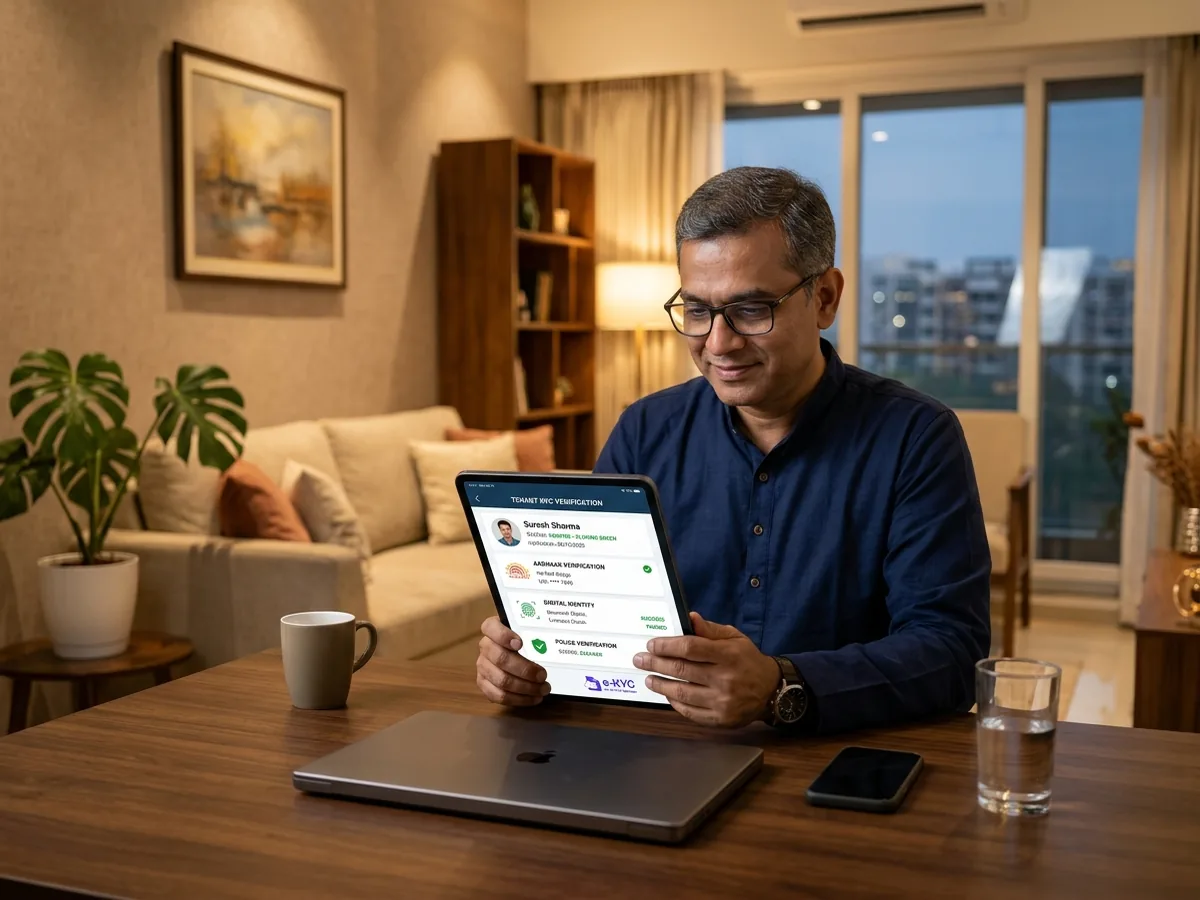
The good news is that standing in crowded police stations for half a day is no longer necessary. In 2026, state police departments across major Indian metros—including Delhi, Uttar Pradesh (Noida/Ghaziabad), Karnataka (Bengaluru), Tamil Nadu (Chennai), and Maharashtra (Mumbai/Pune)—provide seamless, 100% digital tenant verification portals and mobile applications.
In this comprehensive guide, we unpack the statutory laws, step-by-step online portals, required documents, common legal pitfalls, and how having a legally vetted LetOutAgree rental agreement makes your police verification effortless.
Draft Your Verification-Ready Rental Agreement in 3 Minutes
Every official police verification portal requires a signed, legally valid rental agreement. Generate an attorney-vetted agreement tailored to your state, formatted with calibrated margins for e-Stamping, and ready for instant PDF download for flat ₹49.
1. Why Is Tenant Police Verification Mandatory in India?
Tenant police verification is not merely a precautionary safety check; it is a statutory order issued by Commissioners of Police and District Magistrates across Indian states under powers vested by the Code of Criminal Procedure (CrPC) / Bharatiya Nagarik Suraksha Sanhita (BNSS).
The core statutory objectives include:
- Criminal Background Screening: Cross-referencing tenant particulars against state and national criminal record databases to identify absconding criminals, financial fraudsters, or individuals with active non-bailable warrants.
- Preventing Illegal & Terrorist Activities: Ensuring rental accommodations in dense urban metros are not rented anonymously by syndicate operatives or subversive elements using fake identities.
- Foreign National Compliance: Enforcing statutory monitoring of foreign expatriates, international students, and tourists under the Registration of Foreigners Rules, 1992 and Form-C immigration reporting.
- Dispute Deterrence: Tenants who know their permanent native address and biometric ID proofs are on official police record are significantly less likely to default on rent, cause deliberate property damage, or abscond without paying utility bills.
2. Landlord Legal Penalties for Non-Compliance (IPC Sec 188 & BNS Sec 223)
Under Section 144 of the CrPC (now Section 187 of the BNSS), Police Commissioners across cities like Delhi, Noida, Gurugram, Bengaluru, and Mumbai periodically issue public executive orders mandating all residential and commercial landlords to furnish tenant particulars within 15 to 30 days of tenancy commencement.
If a landlord wilfully neglects or fails to submit tenant verification details:
| Statutory Provision | Nature of Offence | Legal Penalty / Punishment |
|---|---|---|
| Section 188, IPC / Section 223, BNS (Simple Disobedience) | Failure to submit tenant verification form to local police jurisdiction. | Simple imprisonment up to 1 month, or fine up to ₹1,000, or both. |
| Section 188, IPC / Section 223, BNS (Endangerment / Serious Harm) | If tenant causes riot, public nuisance, or commits serious felony while unverified. | Imprisonment up to 6 months, or fine, or both. |
| Section 212, IPC / Section 249, BNS (Harbouring an Offender) | Renting to a known criminal or failing due diligence when tenant is an absconder. | Imprisonment up to 3 to 5 years depending on the tenant's primary offence. |
Case Precedent Note: Courts across India have repeatedly affirmed that landlords cannot claim ignorance of the law. If an unregistered tenant runs an illegal narcotics operation, commercial prostitution racket, or cybercall center from your flat, police routinely seal the property under court summons and name the landlord as an accomplice or co-accused in the preliminary First Information Report (FIR).
3. Documents Checklist for Tenant Police Verification
Before initiating online or offline police verification, collect and digitize (clear PDF or JPG format under 2 MB) the following mandatory documents:
A. From the Tenant (and All Adult Co-Occupants)
- Proof of Identity (Photo ID): Original clear copy of Aadhaar Card, Passport, Voter ID, or Driving Licence.
- Proof of Permanent Native Address: Aadhaar Card or Passport showing native residence (critical for native police station verification).
- Passport-Sized Photographs: 2 recent colour passport photographs of each adult occupant.
- Proof of Employment / Occupation: Corporate ID card, latest official salary slip, appointment letter, or valid college identity card if the tenant is a student.
- Contact & Emergency Details: Active mobile phone number, email address, and emergency contact details of immediate family members.
B. From the Landlord (Property Owner)
- Government Photo ID: Aadhaar Card, PAN Card, or Passport.
- Proof of Property Ownership: Recent electricity bill in the landlord's name, paid property tax receipt, municipal water bill, or registered sale deed.
- Permanent Address Proof: If the landlord resides at a different address from the rented property.
C. The Executed Tenancy Contract
- Signed Rental Agreement: A complete copy of the executed rental agreement signed by both landlord and tenant and attested by two witnesses. You can generate a 100% compliant contract on LetOutAgree in 3 minutes for ₹49.
4. State-Wise Step-by-Step Online Verification Portals (2026 Guide)
Most major state police administrations have replaced physical counter visits with centralized citizen service portals and mobile apps. Here is how to complete verification across key Indian metropolitan hubs:
1. Delhi NCR (Delhi Police Citizen Portal / Tatpar App)
- Visit the official Delhi Police Citizen Services Portal (
delhipolice.gov.in) or download the Delhi Police Tatpar mobile app. - Navigate to Citizen Services → Tenant Verification.
- Register with your mobile number and verify via OTP.
- Enter Property Owner details, Property Address, and local Police Station jurisdiction.
- Enter Tenant particulars, including native address, employer/office address, and mobile number.
- Upload tenant photo, ID proof, and a scanned copy of the executed rental agreement.
- Submit the form and instantly download the Official Delhi Police Acknowledgment Receipt with a unique tracking Reference ID.
2. Uttar Pradesh (Noida, Greater Noida, Ghaziabad, Lucknow via UPCOP App)
- Download the official UPCOP mobile app (available on Google Play Store and iOS App Store) or visit
uppolice.gov.in. - Register an account using your mobile number and Aadhaar/OTP.
- Select Tenant / Domestic Help Verification from the main menu.
- Fill in the complete landlord profile, property details, and tenant personal/employment history.
- Upload the tenant's photo, Aadhaar card, and native police station details.
- Pay the nominal government fee of ₹50 via UPI, Debit Card, or Net Banking.
- The local UP Police Thana conducts digital background cross-checks and issues a downloadable verified clearance certificate within 7 to 14 days.
3. Karnataka (Bengaluru via KSP App & Citizen Portal)
- Visit the Karnataka State Police (KSP) Citizen Portal (
ksp.karnataka.gov.in) or use the KSP Mobile App. - Select Citizen Services → Police Verification Certificate (PVC) / Tenant Verification.
- Complete user registration and select the Bangalore City Police (BCP) jurisdiction.
- Enter the tenant's demographic details, employer verification, and emergency contact numbers.
- Upload identity proofs and the executed 11-month rental agreement.
- Submit the application and save the generated e-Challan / Acknowledgment Slip for society RWA submission.
4. Tamil Nadu (Chennai & Suburbs via TN Police Portal & Kavalan App)
- Visit the Tamil Nadu Police Citizen Services Portal (
eservices.tnpolice.gov.in) or download the Kavalan SOS / TN Police Citizen App. - Click on Police Verification Service → Tenant Verification.
- Provide landlord credentials, property address, and tenant's original native district in Tamil Nadu or other Indian states.
- Upload required identity proofs and tenant passport photograph.
- Pay the nominal fee online (where applicable) and download the timestamped submission acknowledgment.
5. Maharashtra (Mumbai, Pune, Thane via PCS MahaOnline Portal)
- Visit the official Mumbai Police Citizen Portal (
mumbaipolice.gov.in) or the Maharashtra Police Clearance portal (pcs.mahaonline.gov.in). - Navigate to Tenant Information Form Submission.
- Enter the property details, landlord details, and tenant identification.
- Enter details of the two witnesses and the Registered Leave & License agreement registration number (compulsory in Maharashtra under Sec 55 MRC Act).
- Verify tenant mobile number via OTP.
- Submit the form completely free of cost and download the stamped Mumbai / Maharashtra Police Tenant Information Summary PDF.
Create Your Rental Agreement Online in 3 Minutes
Create a legally valid rental agreement online with instant print-ready download.
Draft Legal Agreement Now (₹49)
5. Offline Tenant Police Verification Process (Alternative Method)
If you reside in a Tier-2/Tier-3 town or a rural district where the state police online portal is temporarily unavailable or does not yet offer digital tenant processing, follow this offline protocol:
- Obtain the Official Form: Download the standard Tenant Verification Form from your state police website or collect a physical form from the nearest local police station.
- Fill Complete Particulars: Fill in landlord details, property description, tenant's native address, workplace details, and previous landlord references in block capital letters.
- Affix Photographs: Paste passport-size colour photographs of both landlord and tenant in the designated boxes.
- Attach Self-Attested Photocopies: Attach self-attested photocopies of the tenant's Aadhaar/Passport, employee ID, landlord's property ownership proof, and the signed rental agreement.
- Submit at Police Station: Visit the local Police Station that has jurisdiction over the rented premises and submit the dossier to the Duty Officer or Community Liaison Desk.
- Collect Signed Acknowledgment: Ensure the police officer stamps, signs, and dates the counterfoil or acknowledgment copy. Retain this counterfoil safely as your statutory shield against Section 188 IPC / Section 223 BNS penalties.
6. Five Costly Mistakes Landlords Must Avoid
Protecting your property requires avoiding these common operational and legal traps:
- Delaying Verification Until Months After Move-In: Many landlords postpone police verification until the society management threatens a fine. If an incident occurs within the first week of tenancy, the owner is immediately vulnerable to prosecution. Always complete verification within 14 days of move-in.
- Accepting Unverified Photocopies: Never accept a printed photocopy of an Aadhaar card without scanning its official QR code via the mAadhaar app or requesting DigiLocker verification. Counterfeit identity cards are widely used by professional rent scammers.
- Not Verifying Bachelor & Roommate Co-Tenants: When renting to groups of students or working professionals, verifying only the primary signatory is a severe mistake. Ensure every adult resident residing on the premises is included in the tenant verification application.
- Failing to Store the Police Acknowledgment Slip: If a criminal investigation ever touches your property, the police will ask for documentary proof that you notified law enforcement. Maintain a permanent digital backup of the acknowledgment PDF or stamped paper slip alongside your agreement.
- Using Vague Boilerplate Rental Agreements: Avoid ambiguous contracts downloaded from random internet forums. Use an attorney-vetted agreement from LetOutAgree with explicit clauses governing illegal activities, subletting bans, and immediate termination for breach of law.
For a detailed breakdown of essential clauses, read our 15 Crucial Rental Agreement Clauses Checklist.
This article is for informational purposes only and does not constitute legal advice. Please consult a qualified legal professional for advice specific to your situation.

Comments (0)
Login to leave a comment.