

Entering into a commercial shop, showroom, or corporate office lease in India is a major strategic milestone for any business enterprise. Whether you are an ambitious retailer launching a flagship store on a high street, a healthcare professional setting up a specialized clinic, a tech startup leasing workstations in an IT park, or an established company acquiring prime warehouse space, your commercial lease deed is one of your largest recurring balance-sheet commitments.
Unlike residential tenancies—where agreements are typically straightforward 11-month arrangements revolving around monthly rent and a security deposit—commercial leases involve immense upfront capital expenditures, multi-year operating horizons, specialized infrastructure dependencies, and strict statutory tax obligations. A business tenant routinely invests lakhs or even crores of rupees into customized interior fit-outs, heavy-duty electrical wiring, central HVAC installations, specialized display fixtures, and local commercial brand equity.
If a commercial lease agreement contains ambiguous terms, an unscrupulous landlord can impose arbitrary rent hikes, refuse to sanction additional electricity load, block external storefront signage, or unilaterally terminate the tenancy during the peak business season—wiping out substantial capital investments. Conversely, landlords face severe risks if their commercial deeds fail to define clear GST liabilities, TDS deduction procedures, structural damage remedies, or sub-leasing restrictions.
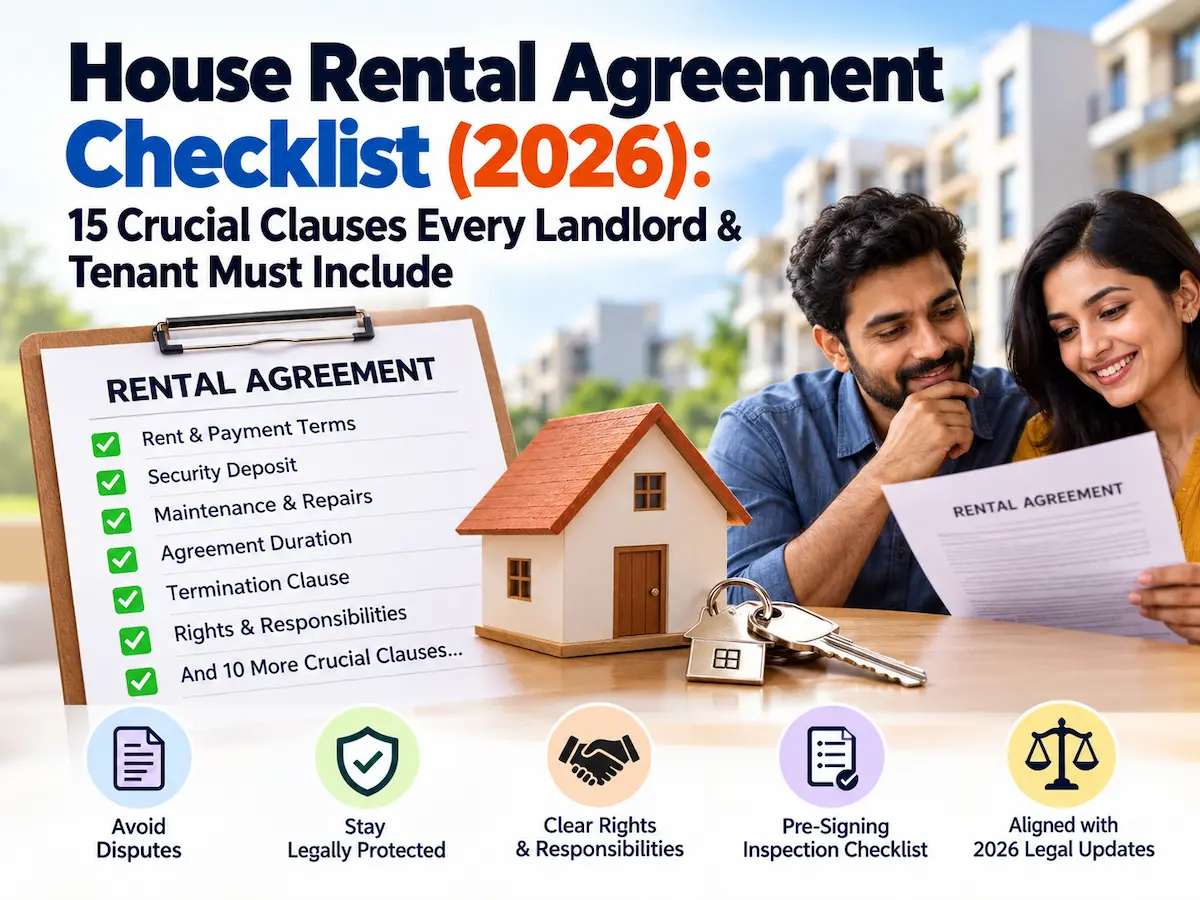
To safeguard your capital and guarantee uninterrupted business operations, we have formulated the definitive 2026 Commercial Shop & Office Lease Agreement Checklist, detailing the 12 non-negotiable clauses every business tenant and commercial property owner must inspect before signing.
Draft Your Commercial Shop or Office Lease in 3 Minutes
Draft an attorney-vetted commercial lease agreement customized for retail stores, corporate offices, clinics, and warehouses. Includes fit-out rent-free periods, power load covenants, CAM terms, and GST-TDS clauses for flat ₹49.

The Fundamental Distinction: Residential vs Commercial Leases in India
Before examining the specific clauses, it is essential to recognize how Indian law treats commercial property leases compared to residential arrangements. As detailed in our comprehensive guide on Leave & License vs Lease Deeds, commercial spaces carry distinct legal and statutory considerations:
| Parameter | Residential Rental Agreement | Commercial Shop & Office Lease |
|---|---|---|
| Standard Tenure | 11 Months (frequently renewed) | 3 to 9 Years (structured as 3+3+3 or 5+5 years) |
| Statutory Governance | State Rent Control Acts & Model Tenancy Act | Transfer of Property Act, 1882 & Indian Contract Act, 1872 |
| GST Implication | Exempt (unless let out to a registered corporate entity) | 18% GST Applicable (SAC 997212) on commercial rent |
| Tax Deducted at Source (TDS) | Section 194-IB (5% TDS only if rent exceeds ₹50,000/month) | Section 194-I (10% TDS) if annual rent exceeds ₹2,40,000 |
| Interior Fit-Out Window | Immediate move-in (1–3 days) | 30 to 90 Days Rent-Free Fit-Out Period |
| Registration Requirement | Optional under 11 months (Notarization standard) | Compulsory Registration at SRO for leases exceeding 11 months (Sec 17 Registration Act) |
The 12 Crucial Clauses of a Commercial Lease Agreement
1. Permitted Commercial Use & Municipal Zoning Compliance
Never sign a commercial agreement with vague phrasing like "for commercial purposes only". The deed must explicitly define the exact authorized commercial activity—such as a "Retail Apparel and Footwear Store", "Multi-Specialty Dental Clinic", "Software Development and IT Consulting Office", or "Quick Service Restaurant (QSR)".
Crucially, the landlord must provide a warranty that the property conforms to local municipal zoning laws (Master Plan land use category: Commercial or Mixed-Use Commercial) and possesses an approved Completion Certificate (CC) / Occupancy Certificate (OC). The agreement must explicitly grant the tenant the right to use the premises address to obtain statutory operating licenses, including:
- State Shops & Commercial Establishments Act Registration (Gumasta license).
- Goods and Services Tax (GST) Principal Place of Business Registration.
- Municipal Trade License and Health License (for food & beverage establishments).
- Fire Safety Department No-Objection Certificate (Fire NOC).
2. Demised Premises Specification: Carpet Area vs Super Built-Up Area
One of the most frequent disputes in Indian commercial real estate stems from area measurement ambiguities. Commercial builders and landlords frequently quote Super Built-Up Area, which includes common corridors, lift shafts, stairwells, and lobby space with a loading factor ranging from 25% to over 45%.
Your commercial checklist must require the agreement to explicitly state:
- RERA Carpet Area / Usable Usable Area: The actual internal net usable floor area bounded by interior walls where your staff and merchandise will operate.
- Rent Computation Base: Explicitly clarify whether monthly rent is calculated on carpet area or super built-up area (e.g., "₹85 per sq.ft. of Carpet Area" vs "₹55 per sq.ft. of Super Built-Up Area").
- Precise Schedule & Boundaries: Shop/Unit number, wing, floor level, ceiling height, linear storefront display frontage (in feet), and adjacent boundary demarcations (North, South, East, West).
- Dedicated Car & Two-Wheeler Parking: Explicit number of reserved basement/stilt parking slots allocated for business management, plus customer/visitor parking access.
3. Rent-Free Fit-Out Period & Handover Protocol
Commercial spaces are rarely handed over in ready-to-trade condition. Tenants must perform civil carpentry, electrical cabling, HVAC ducting, acoustic partitioning, IT network installation, and brand painting before opening their doors to revenue-generating customers.
Under Indian commercial leasing conventions, tenants negotiate a Rent-Free Fit-Out Window of 30 to 90 days (and up to 120 days for large corporate office floors or anchor retail spaces). Ensure the clause stipulates:
- Rent Waiver: Base monthly rent does not accrue during the sanctioned fit-out window.
- Commercial Operations Date (COD): Rent commencement begins strictly on the earlier of: (a) the official opening date for public business, or (b) the day immediately following the expiry of the agreed fit-out period.
- Operational Utilities: The tenant pays actual metered electricity and water consumed during fit-out, while base rent remains zero.
4. Lease Tenure, Lock-In Period & Termination Notice
Because commercial interior fit-outs represent significant sunk capital, commercial tenants require tenure security. Commercial leases are commonly structured for 5, 9, or 15 years, with renewal terms partitioned into 3-year or 5-year cycles (e.g., 3+3+3 years).
The agreement must address the Lock-In Period with utmost precision:
- Mutual Lock-In: For an initial duration (typically 24 to 36 months), neither party can terminate the lease without cause.
- Exit Consequences: If the landlord breaches the lock-in and terminates unlawfully, they must refund the entire security deposit plus pay liquidated damages equivalent to the remaining lock-in rent or tenant fit-out depreciation.
- Post Lock-In Termination: Following the lock-in period, either party can terminate the tenancy by serving a 2 to 3 months written notice without penalty.
- Cure Period: Before either party can declare a material lease default, they must serve a formal 15 to 30 days written cure notice allowing the alleged violation to be rectified.
5. Rent Escalation Clause: Percentage & Frequency
While residential agreements often see 5% to 10% annual increases, commercial leases follow structured, predictable escalation cycles to allow long-term financial budgeting. Standard commercial escalation conventions in Indian metro commercial hubs (Mumbai, Bengaluru, Delhi NCR, Hyderabad, Chennai, Pune) include:
- 12% to 15% Escalation Every 3 Years (the most standard formula in corporate Grade-A and retail leases).
- 5% Escalation Every 12 Months (common in standalone retail shops and high-street locations).
Ensure the clause specifies the exact mathematical calculation, formula, and effective calendar dates. Ambiguous clauses stating "rent will increase as per prevailing market rates" invite subjective disputes and must never be permitted.
6. Security Deposit: Quantum, Safe Custody & Refund Deadlines
Commercial security deposits in India are substantial, generally ranging from 3 to 6 months' rent (and historically up to 10 months in Bengaluru and Mumbai). Because of the massive capital at stake, this clause requires strict legal guardrails:
- Interest-Free Refundable Deposit: Clarify that the deposit is an interest-free financial guarantee held in trust by the landlord.
- Strict Deductions Scope: Deductions are strictly limited to unpaid metered utility bills, property tax shares (if contractually agreed), or verified structural damage directly caused by the tenant. Normal wear and tear, cosmetic aging, and pre-authorized fit-out alterations are strictly non-deductible (see our guide on Painting & Repair Responsibilities).
- Definite Refund Timeline: The landlord must return the entire deposit via NEFT/RTGS within 7 to 15 business days of peaceful, vacant key handover.
- Default Penal Interest: If the landlord fails to refund the deposit within the agreed timeline, penal interest of 12% to 18% per annum accrues on the outstanding sum until full realization.
7. Common Area Maintenance (CAM) & Utility Billing Transparency
In shopping malls, commercial complexes, and IT parks, Society Maintenance Charges (CAM) can add 15% to 30% to your monthly occupancy cost. CAM clauses must detail:
- Services Covered: Building security, common corridor cleaning, elevator maintenance, landscape upkeep, exterior facade lighting, and garbage disposal.
- Billing Structure: Explicitly state whether CAM is billed as a Fixed Rate per sq.ft. (e.g., ₹12/sq.ft./month) or on an Actual Cost Reimbursable Basis (with open-book audit rights for the tenant to inspect actual vendor bills).
- Sinking Fund & Capital Expenditures: Sinking funds, major structural repair funds, and building insurance remain the exclusive responsibility of the property owner, not the tenant.
8. Power Load Sanction, DG Power Backup & HVAC Installation
Commercial operations require robust power infrastructure. A retail showroom with multiple air conditioners and illuminated display lights, or a clinic with medical machinery, cannot function on a standard domestic single-phase power connection.
Your checklist must verify and mandate:
- Sanctioned Electrical Load: Minimum dedicated power load (e.g., 15 kW, 30 kW, or 50 kW 3-phase commercial connection) sanctioned by the state electricity board (BESCOM, TANGEDCO, MSEDCL, Tata Power, etc.).
- Load Enhancement Responsibility: If load enhancement is required, specify who bears the application cost and refundable security deposit with the electricity board.
- 100% DG Power Backup: Provision of automatic diesel generator (DG) power backup with dual-source energy meters, specifying standard fuel cost sharing per unit consumed.
- Outdoor AC Compressor Mounting: Clear, unencumbered rights to install outdoor condenser units on designated building ledges or terraces with access for maintenance.
9. External Storefront Signage & Facade Branding Rights
For high-street retailers, retail banks, and clinics, footfall depends heavily on brand visibility. Commercial agreements must contain an unambiguous Signage Rights clause:
- Dedicated Signage Space: The right to install an illuminated LED storefront glow-sign, vertical totem board, or directional board on the building facade without paying additional advertising rent to the landlord.
- Municipal Permissions: Clarify that the tenant is responsible for local municipal signage fees/taxes, while the landlord warrants that the building structure permits such installations.
- Obstruction Protection: The landlord covenants not to obscure, block, or diminish the visibility of the tenant's signboards with new hoardings, awnings, or landscaping.
10. Sub-Leasing, Desk Sharing & Corporate Restructuring
Businesses evolve rapidly. Over a 5-year lease tenure, a tenant company might merge, acquire a subsidiary, transition into a franchise network, or find that hybrid remote work has left 30% of its office workstations vacant.
A balanced commercial lease must incorporate flexibility:
- Standard Subletting Rule: General subleasing to third-party commercial entities is prohibited without the landlord's prior written consent (with a stipulation that such consent "shall not be unreasonably withheld, conditioned, or delayed").
- Affiliate Exception: The tenant retains the unconditional right to share space, license desks, or assign the lease to its parent company, subsidiaries, or authorized franchise partners without requiring landlord re-approval or paying transfer fees.
11. Statutory Tax Framework: 18% GST & Section 194-I TDS
Tax disputes between commercial landlords and corporate tenants can trigger severe penalties from the Income Tax Department and GST authorities. The lease agreement must detail:
- GST Compliance (18% SAC 997212): If the landlord is registered under GST, they must issue a valid GST tax invoice on or before the 5th of every month. This allows the tenant to claim Input Tax Credit (ITC). If the landlord is unregistered and the tenant is a registered entity, the Reverse Charge Mechanism (RCM) rules must be acknowledged.
- TDS under Section 194-I (10%): Commercial tenants (companies, LLPs, and audited firms) are statutorily required to deduct 10% TDS on commercial rent (if total annual rent exceeds ₹2,40,000) and deposit it with the government using Form 26QB/Challan 281, issuing quarterly Form 16A certificates to the landlord.
- Property Tax Indemnity: The landlord must covenant to pay all municipal property taxes and commercial betterment levies on time, indemnifying the tenant against municipal attachment, sealing, or disconnection of utilities.
12. Force Majeure, Rent Abatement & Surrender (De-fit) Terms
The economic shocks of civic construction, urban road-widening, building sealing, and pandemics demonstrated the critical necessity of an airtight Force Majeure clause. Your checklist must include:
- Rent Abatement: If the premises become inaccessible or unfit for commercial trading due to an Act of God, fire, flood, civic unrest, or government lockdown lasting beyond 15 consecutive days, monthly rent and CAM charges are suspended proportionally.
- Right of Exit: If the disruption continues for more than 60 to 90 days, the tenant can terminate the lease without lock-in penalty and claim an immediate full refund of the security deposit.
- Surrender Protocol (De-Fit vs As-Is): At handover, does the tenant restore the space to a "bare shell" by dismantling partitions, or does the landlord accept the premises in its "as-is fitted-out condition"? Specifying this upfront prevents multi-lakh restoration disputes at lease end.
Commercial Lease Stamp Duty & Registration Norms
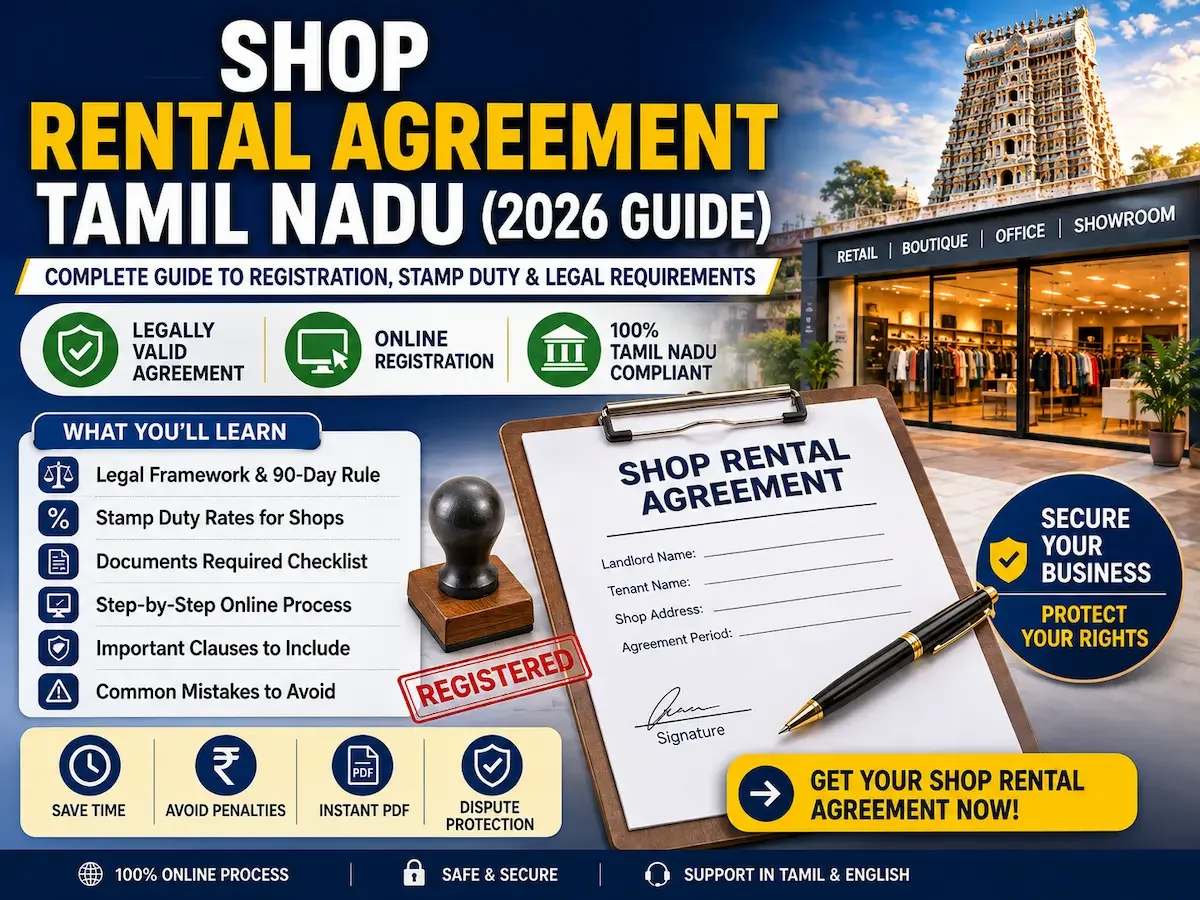
Under Section 17(1)(d) of the Registration Act, 1908 and Section 107 of the Transfer of Property Act, 1882, any commercial lease for a term exceeding 11 months or reserving a yearly rent must be compulsorily registered with the local Sub-Registrar Office (SRO).
| Lease Tenure | Legal Instrument | Registration Requirement | Legal Standing in Court |
|---|---|---|---|
| Up to 11 Months | Commercial Leave & License / Tenancy Agreement | Exempt from compulsory registration (Notarization on State e-Stamp Paper standard) | Admissible as secondary evidence for contractual breaches, unpaid rent, and security deposit recovery. |
| Exceeding 11 Months (3 to 9 Years) | Registered Commercial Lease Deed | Compulsory SRO Registration under Section 17 Registration Act, 1908 | Primary conclusive evidence; creates a legal interest in the property enforceable against third parties. |
Stamp duty for commercial leases is calculated by state governments based on a percentage of the Average Annual Rent (AAR) multiplied by the number of lease years plus the security deposit. Stamp duty typically ranges from 1% to 4% depending on state stamp legislation.
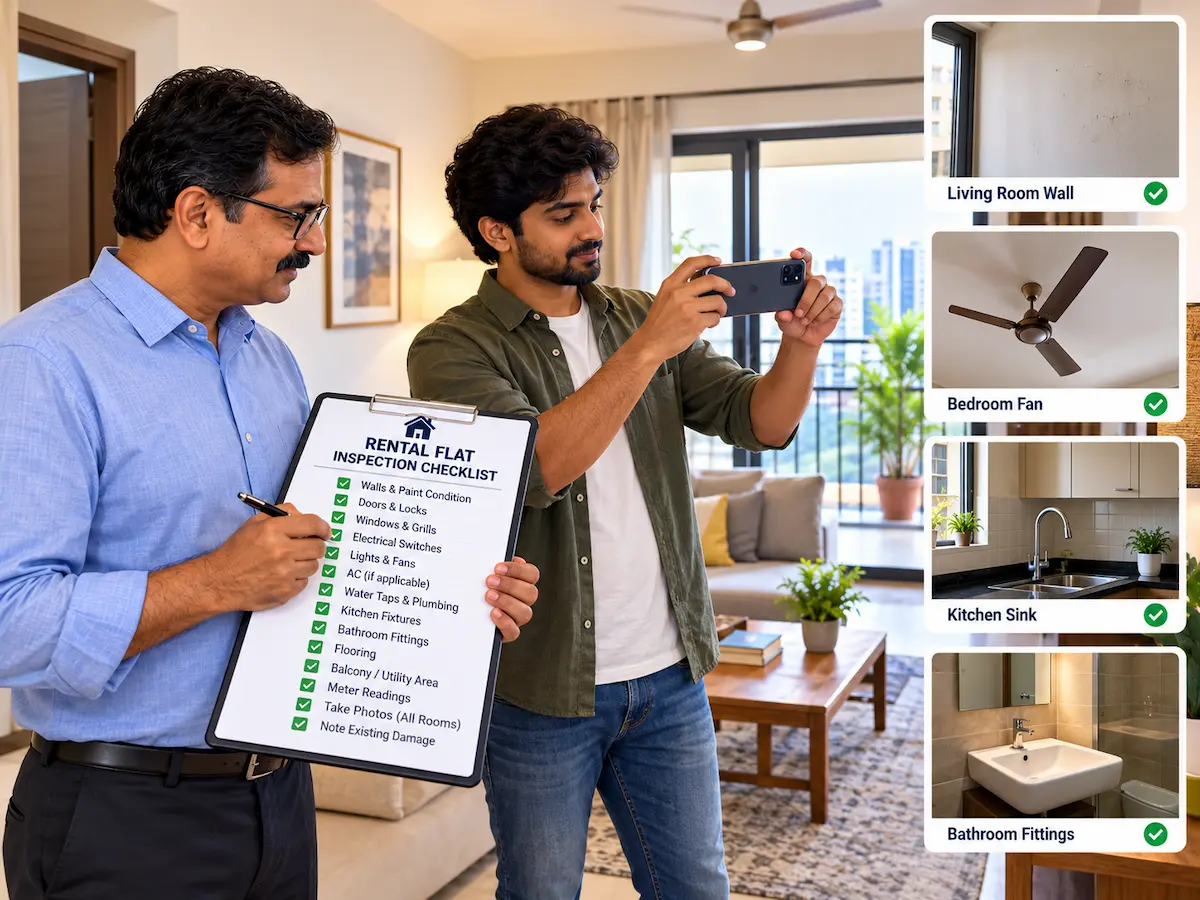
Pre-Signing Commercial Property Inspection Checklist
Before executing your commercial agreement or transferring the initial advance token deposit, complete this quick physical and technical due diligence audit:
- Title Verification: Confirm that the landlord is the registered sole owner or possesses a registered General Power of Attorney (GPA) authorizing commercial leasing.
- Approved Building Sanction Plan: Verify that the shop or office space is approved for commercial use by the local urban development authority (e.g., BDA, DDA, MMRDA, CMDA).
- Sanctioned Electrical Meter & Load: Inspect the physical meter room to verify dedicated commercial metering and ensure no outstanding power dues from previous tenants.
- Water Supply & Drainage Lines: Inspect plumbing connections, drainage line outlets (essential for salons, clinics, food outlets, and pantries), and wet pantry access.
- Fire Safety System: Check overhead fire sprinklers, smoke detectors, fire hose reels, and emergency fire escape stairwells.
- HVAC & Exhaust Ducting Feasibility: Ensure building management permits ceiling-level ducting and exhaust air discharge for kitchens or server rooms.
How to Draft an Airtight Commercial Agreement Online with LetOutAgree
Hiring a commercial property advocate to draft a bespoke commercial lease deed often costs ₹15,000 to ₹35,000, while generic free internet templates lack crucial Indian tax and infrastructure clauses. LetOutAgree offers an attorney-vetted, automated alternative designed specifically for Indian commercial tenancies:
- Select Your Commercial Instrument: Choose between the Commercial Shop Rental Agreement for retail high-street shops and showrooms, or the Commercial Space / Office Lease Agreement for corporate office suites and IT park workstations.
- Enter Business Particulars: Fill in the Landlord entity (individual, HUF, or corporate company), Tenant business name, GSTIN, PAN, and exact property specifications.
- Customize Infrastructure Clauses: Specify the rent-free fit-out period, sanctioned electrical load, dedicated car parking slots, CAM structure, and annual escalation rate.
- Review Free Live Screen Preview: Read through the complete, customized legal deed directly on your screen without paying a single rupee.
- Instant PDF Download for Flat ₹49: Complete a secure payment via UPI or Card to immediately receive your court-approved, print-ready legal PDF calibrated for attachment to state e-Stamp paper.
Equipping your business with a legally balanced, clause-comprehensive commercial lease agreement protects your brand, preserves your working capital, and provides the foundation for stable, profitable commercial operations.
This article is for informational purposes only and does not constitute legal advice. Please consult a qualified legal professional for advice specific to your situation.

Comments (0)
Login to leave a comment.