
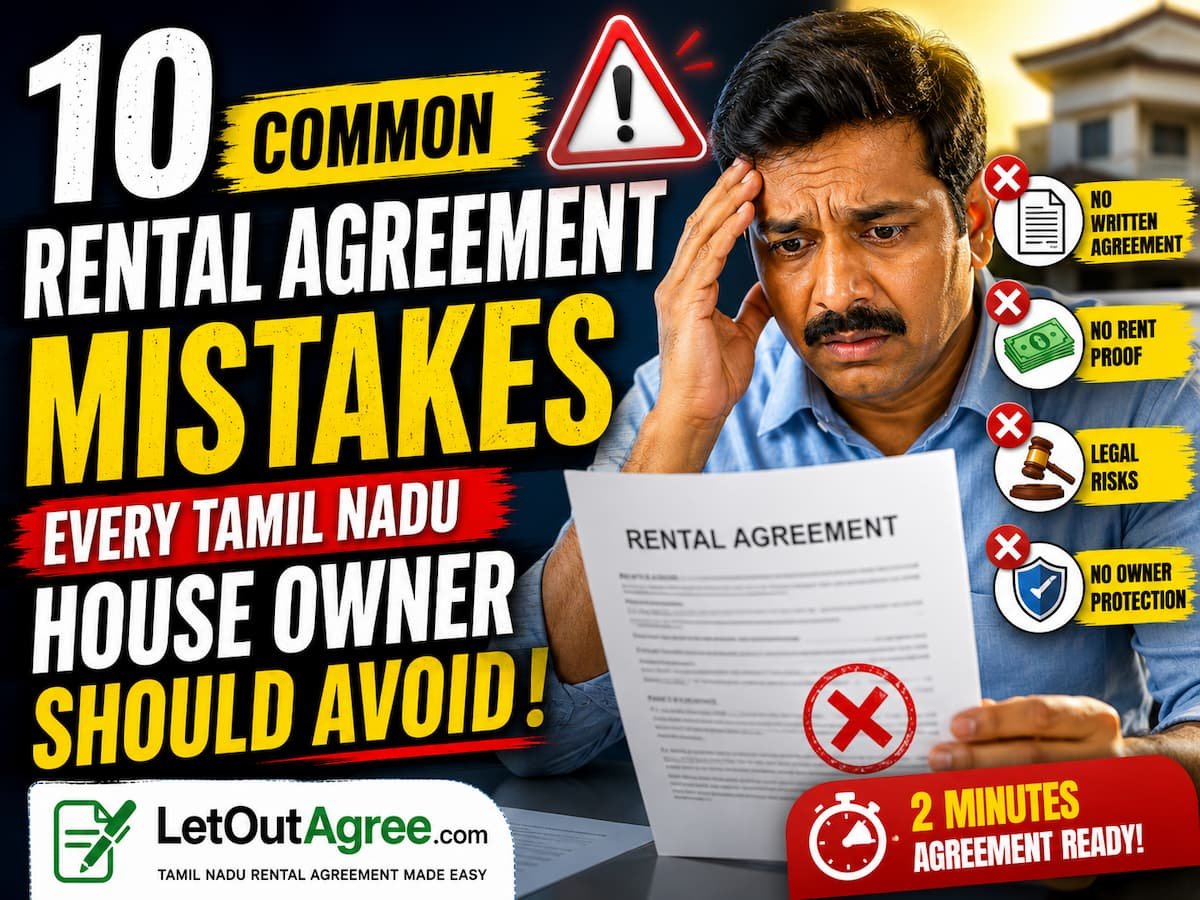
Are you a house owner in Tamil Nadu planning to rent out your property? Renting out a property can be a rewarding source of passive income—but only if you get the paperwork right. A poorly drafted rental agreement can turn a straightforward landlord-tenant relationship into a legal nightmare that drags on for years. With the Tamil Nadu Regulation of Rights and Responsibilities of Landlords and Tenants Act, 2017 (TNRRRLT Act) now governing tenancies in the state, the rules have changed significantly. Many house owners still operate informally, unaware that the law has become much stricter.
In this comprehensive guide, we break down 10 common rental agreement mistakes that Tamil Nadu house owners should avoid—and how to fix them. Whether you're a first-time landlord or have been renting for years, this article will help you stay compliant and protect your investment.
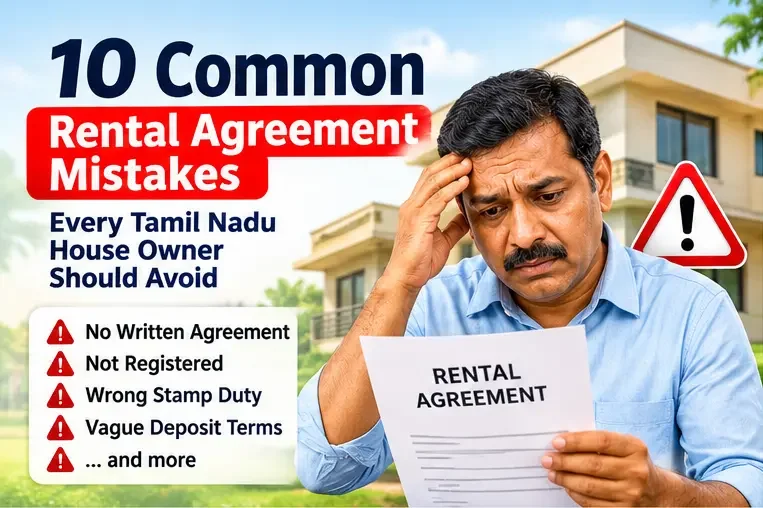
Important Note: Under the TNRRRLT Act, 2017, all tenancy agreements in Tamil Nadu must be in writing and registered with the Rent Authority within 90 days of execution—regardless of the rental period. Verbal agreements no longer hold legal weight, and non-registration can invite eviction proceedings against the landlord [citation:1][citation:2].
📑 Table of Contents
1. Not Having a Written Agreement at All
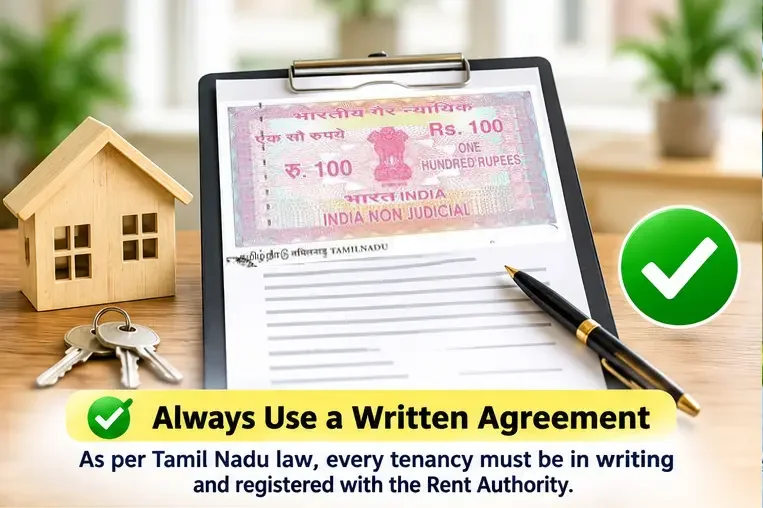
This is the single biggest mistake. Many landlords in Tamil Nadu still rely on oral agreements or informal understandings with tenants. Under the 2017 Act, verbal rental agreements no longer hold legal weight—every tenancy must be backed by a written agreement executed in the prescribed format and registered with the Rent Authority.
The Madras High Court has made it clear: landlords cannot evict tenants through fast-track procedures if they do not have written tenancy agreements. Without a written agreement, you lose access to the streamlined dispute resolution process under the new law and may have to approach regular civil courts instead.
Fix: Always execute a written rental agreement, regardless of how trustworthy the tenant seems. Use a standard template that complies with Tamil Nadu rental laws and get it registered.
2. Failing to Register the Agreement
Many landlords believe registration is only required for agreements exceeding 11 months. This is incorrect. Under the TNRRRLT Act, all tenancy agreements in Tamil Nadu must be registered with the Rent Authority, regardless of the rental period. Registration must be completed within 90 days of execution.
Failure to register is not just a technicality—it is a statutory violation that can make eviction "inevitable" under Section 21(2)(a) of the Act. The Madras High Court has repeatedly upheld that non-registration invites eviction.
Registration can be done online through the Tamil Nadu Tenancy Portal (www.tenancy.tn.gov.in) or offline at the local Sub-Registrar Office.
Fix: Register every rental agreement within 90 days, regardless of tenure. Keep a registered copy for your records. Online registration via the TN Tenancy Portal is quick and paperless.
3. Using the Wrong Stamp Paper or Incorrect Stamp Duty
Stamp duty is not optional—it is compulsory for legal validity. In Tamil Nadu, the stamp duty for rental agreements is generally calculated as 1% of the total annual rent. For short-term agreements (up to 11 months), many use ₹100 or ₹200 e-stamp papers, but the actual legal requirement depends on the stamp duty payable.
Using the wrong instrument for your state or missing the stamp duty altogether can turn a routine possession matter into litigation that outlasts the original tenancy.
Fix: Calculate the correct stamp duty (typically 1% of annual rent) and use the appropriate stamp paper. Consult a legal professional if you are unsure. Use the official e-stamping portal for Tamil Nadu to generate stamp papers online.
4. Keeping the Security Deposit Clause Vague
Security deposit disputes are among the most common reasons for landlord-tenant conflicts. Many agreements simply state the deposit amount without specifying when and how it will be refunded, what deductions are permissible, and under what conditions the deposit can be forfeited.
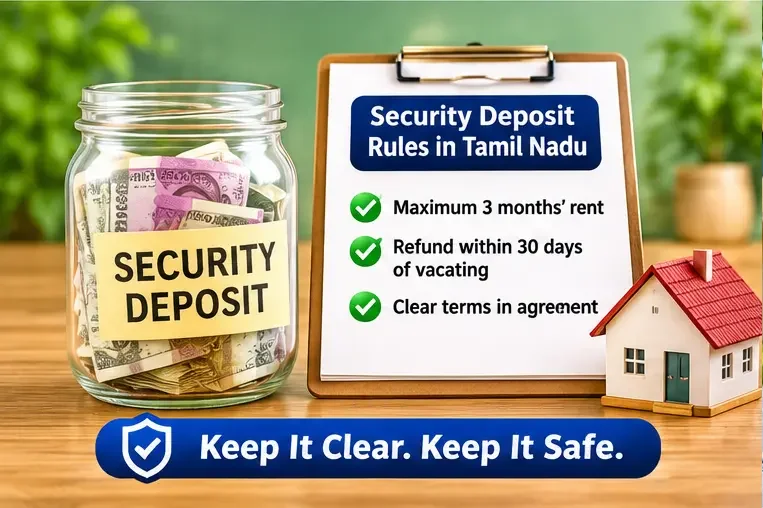
Under the Tamil Nadu Act, the security deposit cannot exceed three times the monthly rent [citation:1]. While the Model Tenancy Act suggests a 2-month cap, Tamil Nadu has retained its 3-month limit.
Fix: Clearly specify the deposit amount (not exceeding 3 months' rent), refund timeline (within 30 days of vacating), permissible deductions (with evidence), and conditions for forfeiture. Include a joint inspection clause at the time of handover.
5. Not Defining Rent Escalation and Payment Terms
Ambiguity about rent increases is a recipe for conflict. Without a clear rent escalation clause, tenants may resist hikes, and you may find yourself in a dispute with no legal backing.
Your agreement should specify:
- The monthly rent amount
- The due date and grace period
- Accepted payment methods
- Late payment penalties
- How and when rent will be increased (e.g., 5-10% annually)
In Tamil Nadu, if your property falls under the Rent Control Act, rent increases may be capped at around 10% per year.
Fix: Include a clear rent escalation clause with specific percentages and timelines. Define all payment terms in writing to avoid misunderstandings.
6. Ignoring the Notice Period Clause
Many landlords fail to specify a clear notice period for termination—or worse, change it unilaterally without the tenant's knowledge. This can backfire when you need the tenant to vacate.
The notice period is typically 1 to 2 months, but it must be clearly stated in the agreement. Both parties should be bound by the same notice period.
Fix: Clearly state the notice period required for termination by either party. Ensure it is mutually agreed and documented. If you want flexibility to terminate early, include a lock-in period clause with associated penalties for early exit.
7. Omitting Maintenance and Repair Responsibilities
Who pays for plumbing repairs? Who handles electrical maintenance? Who covers common area maintenance charges? If your agreement doesn't answer these questions, you and your tenant will likely disagree when something breaks.
Maintenance issues are one of the most common reasons for disputes between landlords and tenants. Failing to specify responsibilities can lead to deterioration of the property and strained relationships.
Fix: Clearly define which repairs are the landlord's responsibility (structural, major systems) and which are the tenant's (minor repairs, upkeep). Also specify who pays for utility bills and maintenance charges.
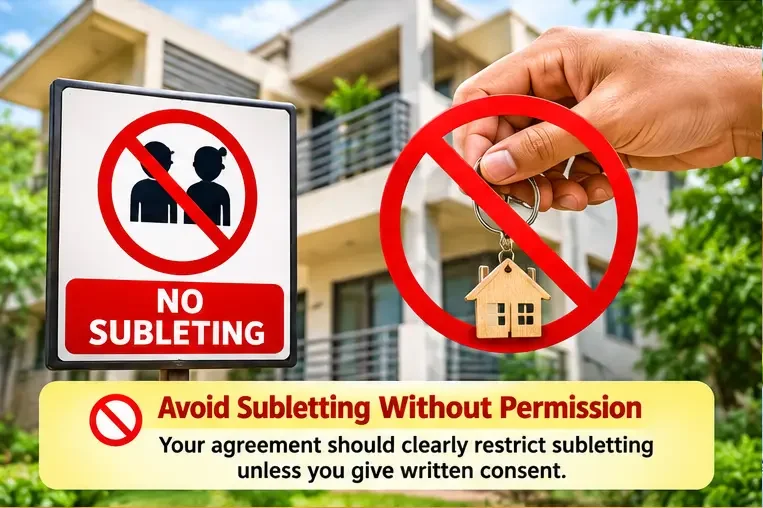
8. Not Including Subletting and Property Use Restrictions
Tenants subletting your property without permission is a common problem in India. If your agreement doesn't explicitly prohibit subletting, tenants may rent out rooms or the entire property to others, often at a profit, while you remain unaware.
Similarly, your agreement should specify the permitted use of the property—residential only, no commercial activity, no pets, etc. Without these clauses, you have little legal recourse if the tenant uses the property in ways you never intended.
Fix: Include clear clauses prohibiting subletting without your written consent and specifying the permitted use of the property. This protects your asset and ensures compliance with local regulations.
9. Forgetting to Include Eviction Grounds
Many landlords assume they can evict a tenant whenever they want. This is false. Under the law, tenants cannot be evicted without one of the valid grounds specified under the applicable Rent Control Act or the Transfer of Property Act.
Your agreement should list the specific grounds for eviction, including:
- Non-payment of rent
- Breach of lease terms
- Property damage
- Unauthorized subletting
- Misuse of premises
If a tenant does not vacate after the notice period, you must file an application with the Rent Authority or Rent Court. If a registered tenancy agreement has expired, you must initiate eviction proceedings before the Rent Courts within six months of expiry.
Fix: Clearly list eviction grounds in the agreement and understand the legal process for eviction under Tamil Nadu law. Consult a legal professional to ensure your eviction clauses are enforceable.
10. Not Conducting Tenant Verification
Many landlords select tenants based on appearance, friendly references, or a brief conversation during property visits. This is risky. Renting to unreliable tenants can lead to unpaid rent, property damage, and legal hassles.
In several cities, police verification of tenants is mandatory. Tamil Nadu provides a tenant verification form that can be downloaded from the state police website. A proper verification process helps identify red flags before they become problems.
Fix: Conduct thorough background checks, including police verification, employment verification, and references from previous landlords. Get complete details from potential tenants in a rent application form.
🏠 Ready to Create Your Rental Agreement?
Don't risk legal disputes with outdated or incomplete rental agreements. Create a professional Tamil Nadu Rental Agreement in just 2 Minutes.
- ✅ Tamil Nadu Specific Format
- ✅ Professional Legal Clauses
- ✅ Instant PDF Download
- ✅ Fast & Secure
Quick Reference: 10 Mistakes & Their Fixes
Final Thoughts
A Rental Agreement is far more than a legal formality—it's your first line of protection against disputes, unpaid rent, property damage, and lengthy legal proceedings.
Spending just a few minutes creating a proper agreement today can save you months or even years of stress in the future.
Frequently Asked Questions
Q: Is a verbal rental agreement valid in Tamil Nadu?
A: No. Under the Tamil Nadu Regulation of Rights and Responsibilities of Landlords and Tenants Act, 2017, verbal agreements no longer hold legal weight. All tenancies must be backed by a written agreement registered with the Rent Authority [citation:1].
Q: What is the deadline for registering a rental agreement in Tamil Nadu?
A: All rental agreements must be registered with the Rent Authority within 90 days of execution, regardless of the rental period. Failure to register is a statutory violation [citation:1][citation:2].
Q: What is the stamp duty for a rental agreement in Tamil Nadu?
A: Stamp duty is generally calculated as 1% of the total annual rent. The exact amount depends on the rental value and tenure of the agreement [citation:3].
Q: Can I evict a tenant without a registered agreement?
A: No. The Madras High Court has made it clear that landlords cannot evict tenants through fast-track procedures if they do not have a written and registered tenancy agreement [citation:2].
Q: Is police verification mandatory for tenants in Tamil Nadu?
A: While not statewide, police verification is mandatory in several cities. Tamil Nadu provides a tenant verification form on the state police website. It is strongly recommended for all landlords [citation:4].
Author: Muthusamy LR
Location: Chennai
Website: www.letoutagree.com
ARTICLE SOURCES
- Tamil Nadu Regulation of Rights and Responsibilities of Landlords and Tenants Act, 2017
- Tamil Nadu Tenancy Portal – Official Registration Portal
- TNREGINET – E-Stamping and Registration
- PRS India – Tamil Nadu Rent Act, 2017
Create Your Rental Agreement in Just 2 Minutes
Professional • Tamil Nadu Specific • Instant PDF
Get Started →



Comments (0)
Login to leave a comment.